The Bush Has a Calendar
When the summer migrants return to the Lowveld, and what thirty years of Kruger arrival records reveal.
Reading the return of the Lowveld's summer migrants
Ask a guide what month it is, and the good ones listen before they answer.
Not because they have lost track of the date, but because in the Lowveld the season announces itself long before the rains do. It arrives in sequence, species by species, in an order that repeats itself with remarkable consistency year after year. For a guide who knows that order, the birds become a second calendar running alongside the first.
Spring is here. And it did not arrive all at once.
The record that proves the pattern
Between 1970 and 2002, Ian Whyte kept a running note of migrant arrivals from his home at Skukuza. Over three decades he logged first-sighting dates for a selection of species, and the resulting averages are one of the more useful pieces of practical birding data available to anyone guiding in the Greater Kruger. He was careful to describe it as personal observation rather than formal science, but across thirty-odd years the trend is difficult to argue with.
The averages read as follows:
| Species | Average arrival | Earliest recorded |
|---|---|---|
| Wahlberg's Eagle | 31 July | 30 July 1994 |
| Yellow-billed Kite | 11 August | 1 August 1986 |
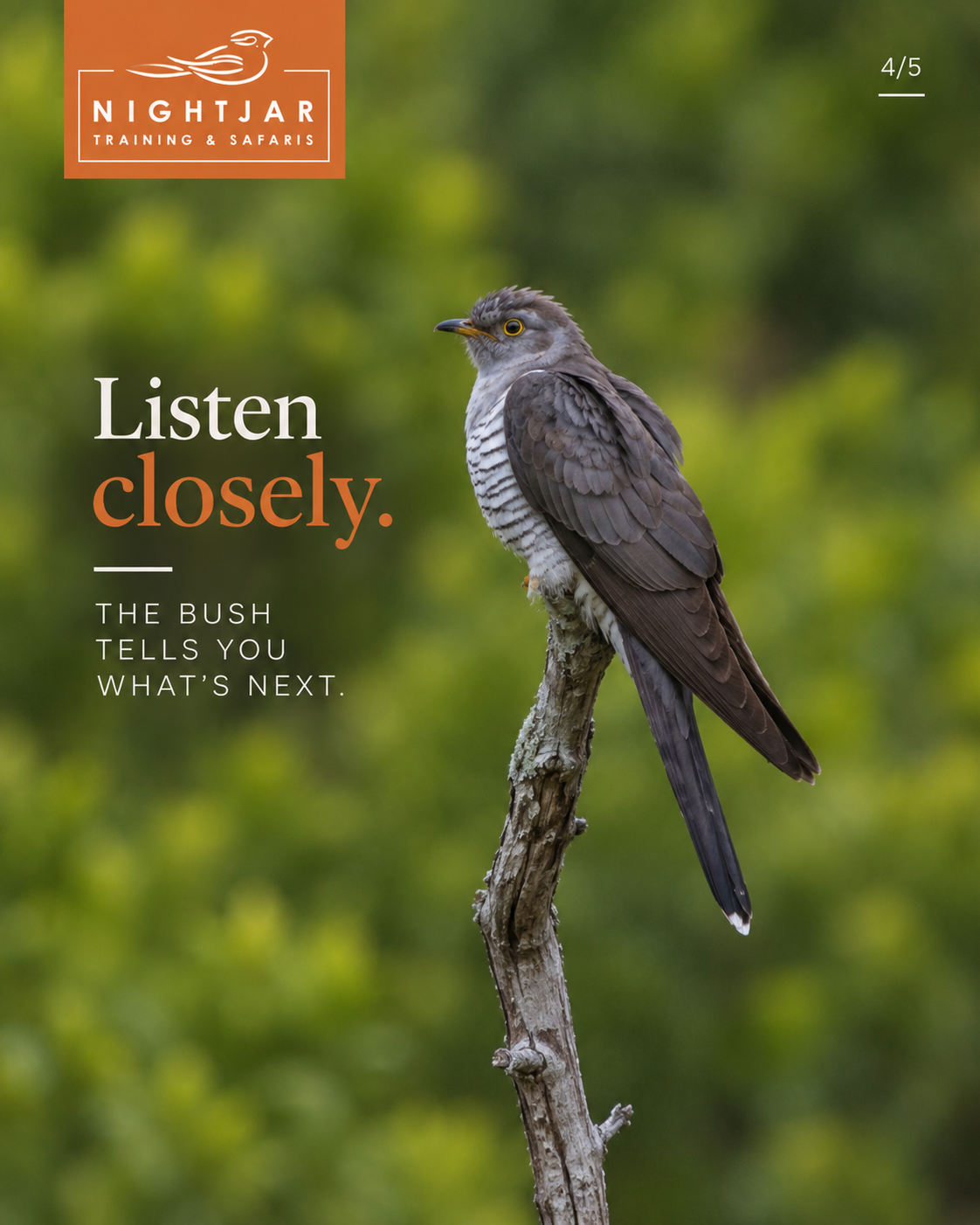
| African Cuckoo | 28 September | 21 September 1996 |
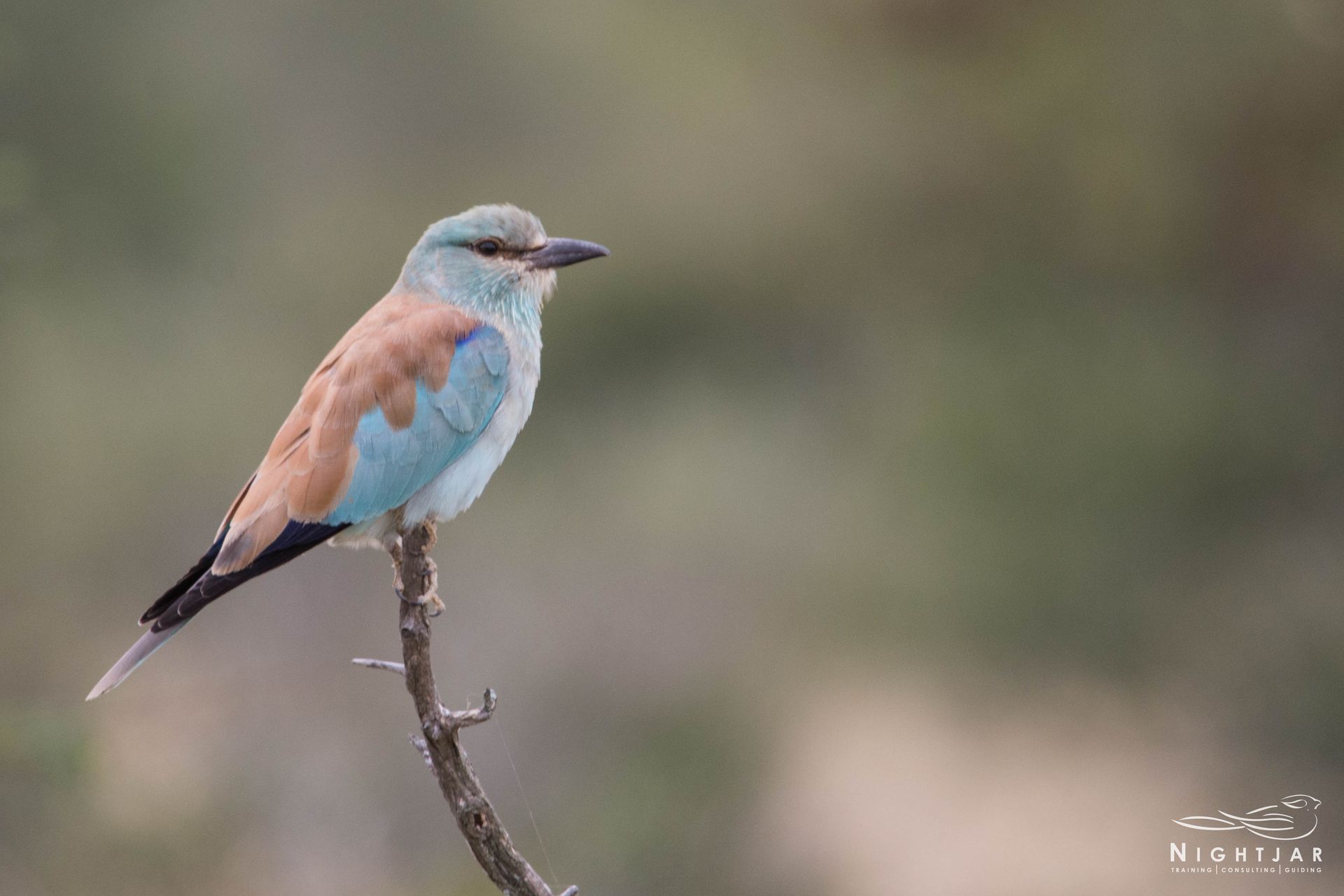
| European Bee-eater | 6 October | 24 September 1999 |
| Red-chested Cuckoo | 7 October | 24 September 1996 |
| Diederik Cuckoo | 12 October | 30 September 1987 |
| Barn Swallow | 16 October | 21 September 1996 |
| African Paradise Flycatcher | 17 October | 8 October 1993 |
| Jacobin Cuckoo | 19 October | 9 October 1982 |
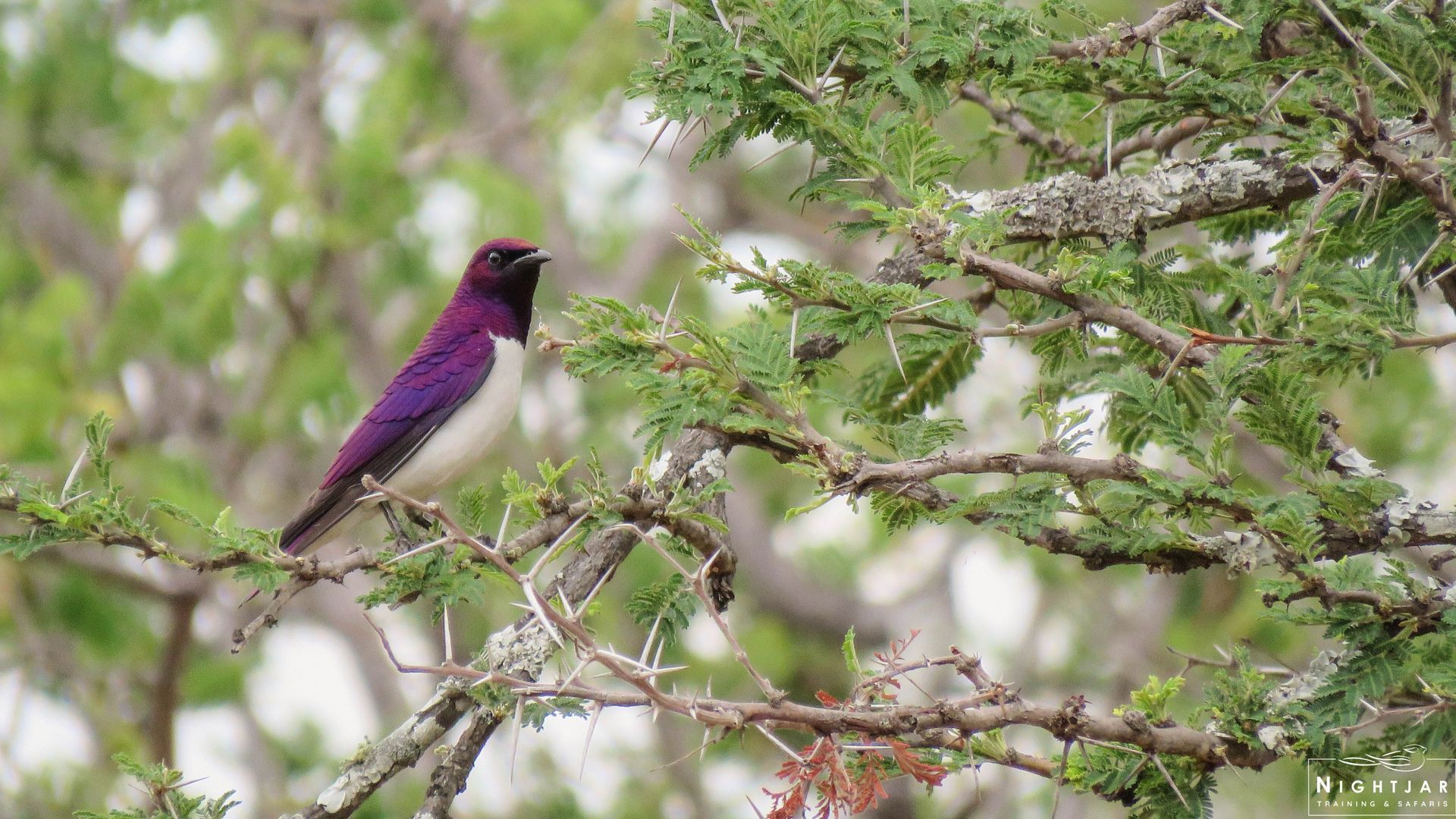
| Violet-backed Starling | 21 October | 12 October 1990 |
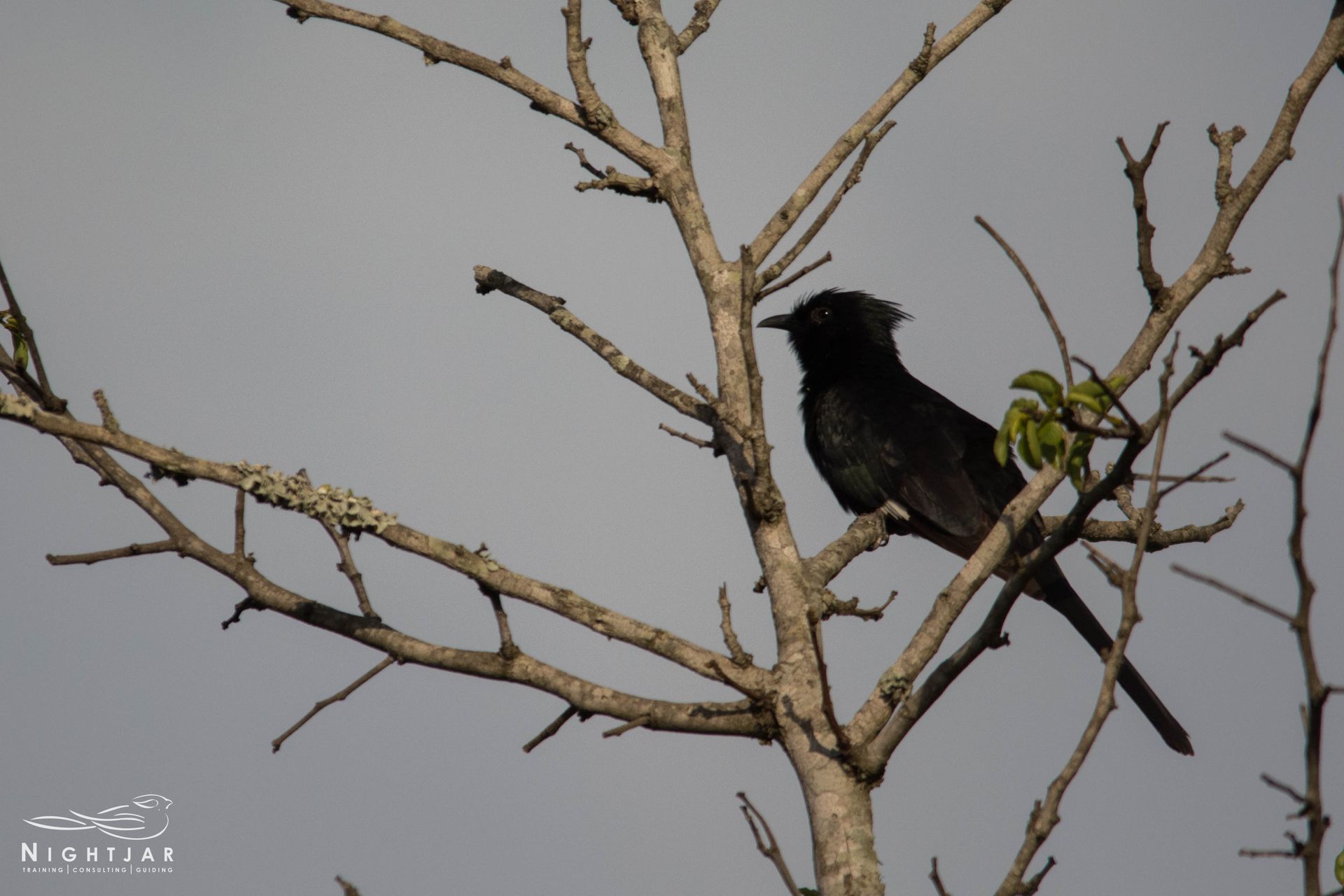
| Black Cuckoo | 25 October | 23 October 1997 |
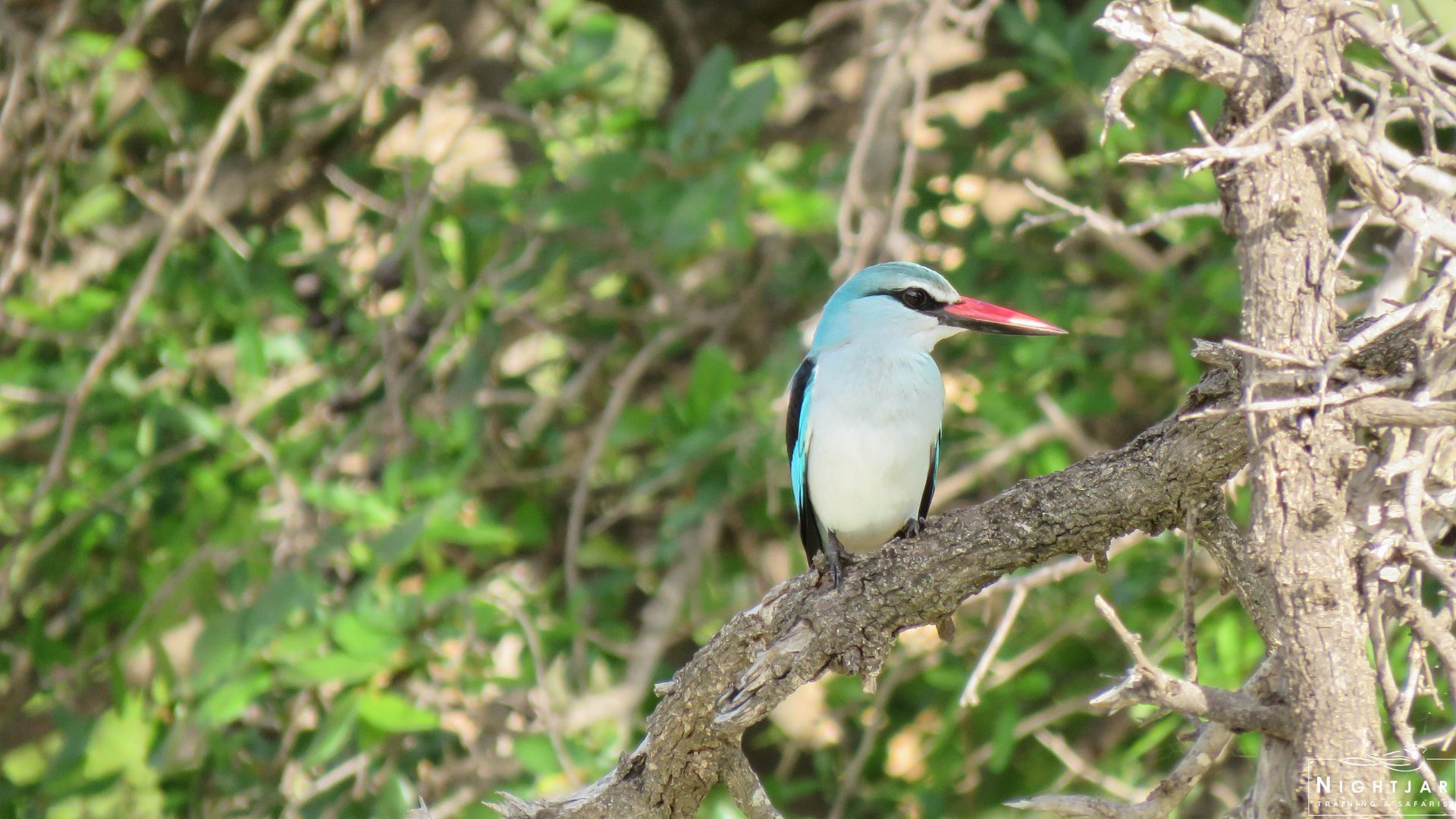
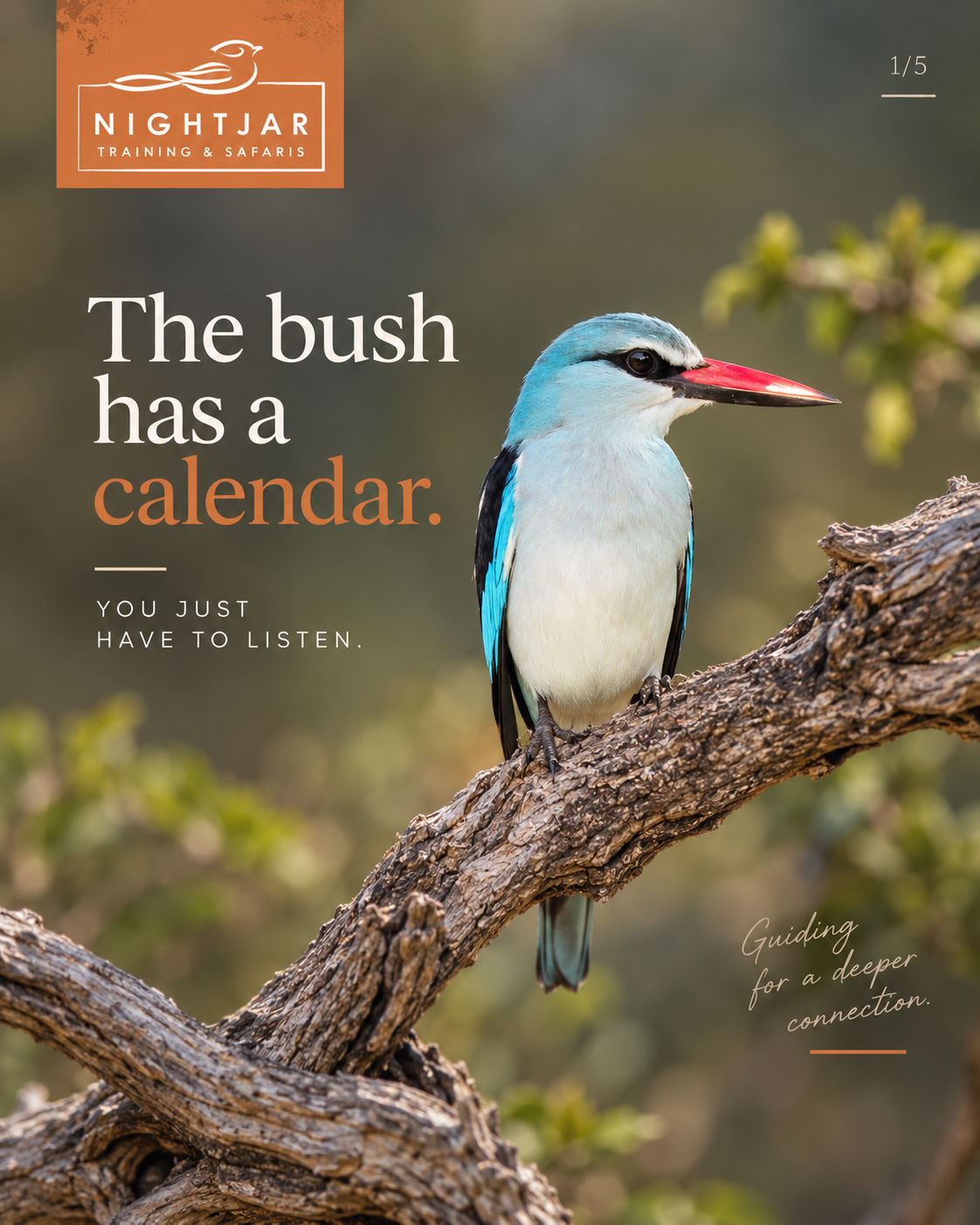
| Woodland Kingfisher | 11 November | 3 November 1978 |
Look at what that sequence is actually telling you. The raptors come first, and they come early, while the bush is still grey and the mornings still cold. Wahlberg's Eagle is back before most people have thought about summer at all, followed within a fortnight by the yellow-billed kites. Then a gap of six weeks with almost nothing, and then the cuckoos arrive in a rush through late September and October. The Woodland Kingfisher, the bird most people associate with the sound of a Lowveld summer, is very nearly the last to show up.
That six-week gap between the kites and the cuckoos is the interesting part. It is not random. The raptors are returning to breed and they need to establish territory and build nests before the food peak arrives. The cuckoos are timing their arrival to the breeding cycles of their host species, which are themselves timing to the insect flush that follows the first rains. Everything in that column is keyed to something else.
Where the calendar gets complicated
If the sequence were simply a list of dates, it would be a memory exercise. It is more interesting than that, because several of the species most closely associated with summer do not fit the pattern cleanly.
Klaas's Cuckoo is the classic example of a bird that looks like a migrant and largely behaves like one, but a population overwinters in the Kruger. Guides who treat the first Klaas's call of the year as a seasonal marker are on shaky ground. The birds are often active around the flowering of the wild pear, Dombeya rotundifolia, drawn to the insect larvae and caterpillars in the bark, which puts them in front of you at a time of year that feels like an arrival but may not be one.
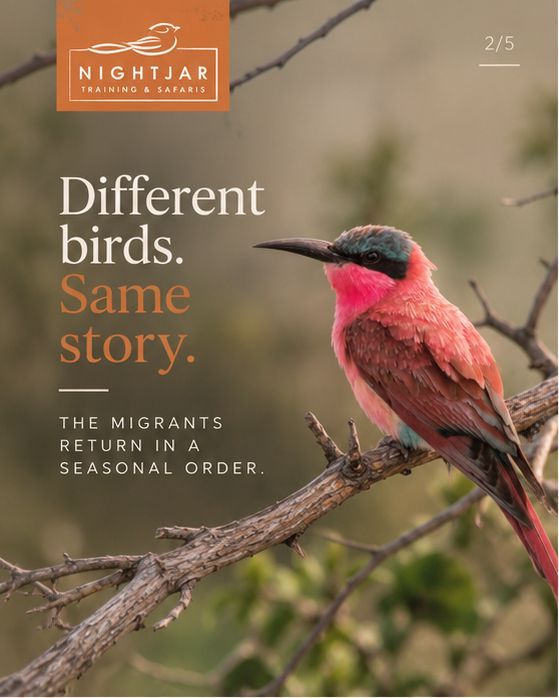
The Southern Carmine Bee-eater has one of the more complicated movement patterns of any bird in the region, and it is routinely misdescribed. It runs a three-stage cycle: north to the Zambezi and Luangwa breeding colonies in August and September, breeding through to November, then a southward post-breeding dispersal into the northern parts of South Africa from roughly December to March, and finally a return north to equatorial Africa from around April. Carmines in the Lowveld are a late-summer bird, arriving well after the spring migrants have settled. Anyone who lists them alongside the European Bee-eater as an October arrival has collapsed two very different journeys into one.
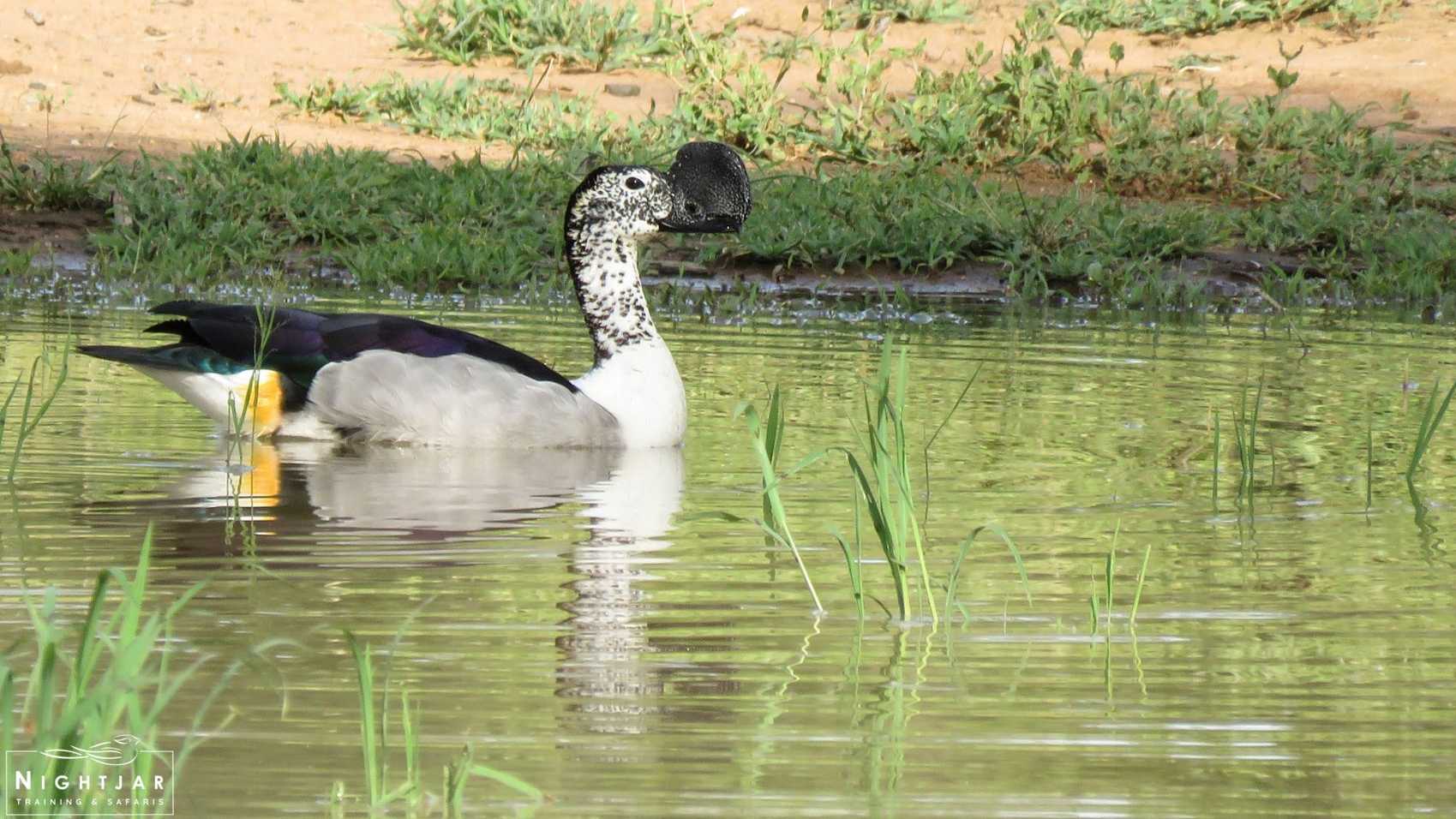
The Knob-billed Duck does not follow a calendar at all. Like a number of waterbirds and the red-billed quelea, it moves on water and rainfall rather than daylight, which means its appearance tells you something about local conditions rather than the time of year. When it turns up, it is worth asking what has filled up nearby.
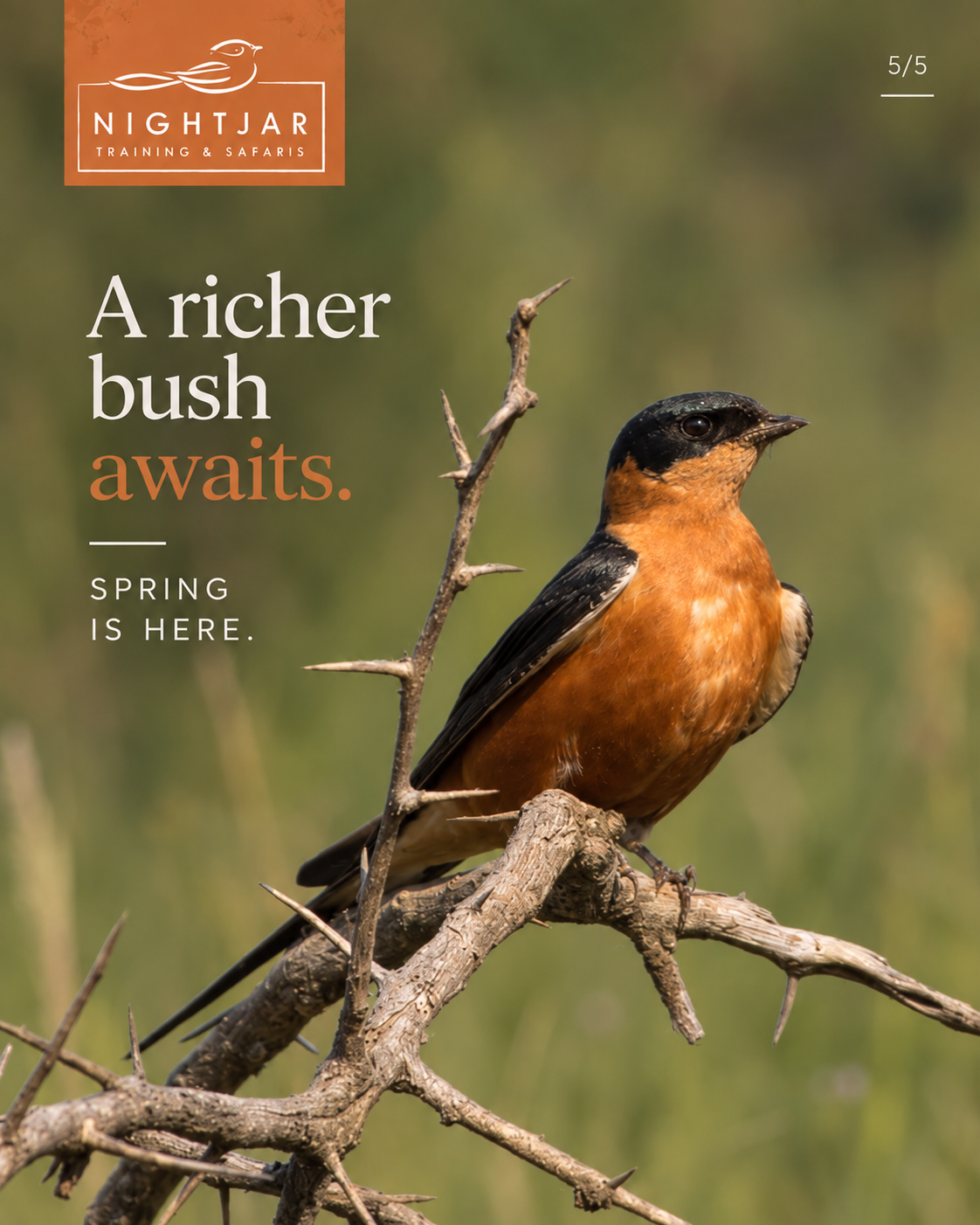
And then there are the swallows, which are worth a paragraph on their own because they make the case better than anything else in the list. The Red-breasted Swallow is an intra-African breeding migrant that reaches southern Africa around August and September, and it will already be back and building by the time you read this. The Barn Swallow is a Palearctic non-breeding migrant coming from Europe, and the Skukuza average has it arriving on 16 October. Same family, two entirely different journeys, roughly six weeks apart. A guide who logs "swallow" has recorded nothing. A guide who separates them has just dated the season to within a fortnight.
Four species, four different answers to the same question. This is precisely why a species list, on its own, is not knowledge.
From identification to interpretation
There is a threshold every developing guide has to cross, and it is not the one most people expect. The hard part is not learning to identify birds. With enough time in the field and a decent set of ears, identification becomes routine.
The threshold is learning to read what a sighting means.
A guide who identifies a Wahlberg's Eagle has answered a question. A guide who notes that the Wahlberg's are back, that the kites have not yet appeared, that the wild pear is in flower and the impala are still a month off lambing, has built a picture of exactly where the season sits. That guide can tell a guest what is coming next week, and be right.
It works in the negative too, which is where it becomes genuinely useful. The absence of a species is data. If the cuckoos are late, something upstream is different. If the carmines have not dispersed south by January, conditions further north are holding them. Guides who only look for what is present are working with half the information.
This is the shift from knowing the bush to reading it. It shows up in interpretation, in guest experience, and it shows up very clearly under assessment. An assessor listening to a guide talk about a returning migrant can tell within about a minute whether that person has learned a fact or understood a system.
What to listen for now
Early September in the Lowveld sits in the quiet stretch of the sequence. The raptors are back and holding territory, and the Red-breasted Swallows should be in. The bulk of the arrivals are still two to six weeks out.
If you are in the field over the next month, the African Cuckoo is your next marker, averaging 28 September, followed closely by the European Bee-eaters and the Red-chested Cuckoo through the first week or two of October. The Barn Swallows come in behind them, mid-October.
Then it comes quickly, and by the second week of November the Woodland Kingfishers will have made the point loudly enough that nobody can miss it.
Spring has arrived, one bird at a time. Have you seen any of these species yet?
Nightjar Training & Safaris conducts FGASA Regional Birding assessments and Slide and Sound exam sittings across the Greater Kruger and wider Southern Africa.
Nightjar Training & Safaris is a FGASA accredited specialist delivery partner. Our in-house FGASA Assessor, Charles Delport, is scoped to assess, NQF2, NQF4, Professional Field Guide, Trails Guide, ARH, SKS Astronomy and SKS Birding. For assessment bookings and dates, contact charles@nightjar.co.za .

Sources
- Migrant arrival dates, Skukuza Whyte, I. Migrant arrival records compiled at Skukuza, 1970 to 2002. Published in "Bird Migration Routes," Kruger Park Birding, Siyabona Africa. https://birding.krugerpark.co.za/birding-in-kruger-migration-routes.html Note: Whyte records these as personal observations across three decades rather than a formal study, and describes them as indicating a general trend.
- Klaas's Cuckoo overwintering population and Dombeya association As above, Kruger Park Birding, Siyabona Africa.
- Southern Carmine Bee-eater, three-stage migration Species text 666, Carmine Bee-eater Merops nubicoides, in The Atlas of Southern African Birds (SABAP1). Animal Demography Unit, University of Cape Town. http://sabap2.adu.org.za/docs/sabap1/441.pdf
- Red-breasted Swallow, movements and migration Cecropis semirufa species account, Biodiversity Explorer, Animal Demography Unit, University of Cape Town. https://www.biodiversityexplorer.info/birds/hirundinidae/hirundo_semirufa.htm
- Wahlberg's Eagle, status and breeding in the Kruger "Eagles and Hawks, Birding Raptor Guide," Kruger Park Birding, Siyabona Africa, drawing on the work of Peter Steyn. https://birding.krugerpark.co.za/birding-in-kruger-raptor-eagles.html
- Further reading Hockey, P.A.R., Dean, W.R.J. and Ryan, P.G. (eds). Roberts Birds of Southern Africa, 7th edition. John Voelcker Bird Book Fund. Chittenden, H., Davies, G. and Weiersbye, I. Roberts Bird Guide, 2nd edition. Southern African Bird Atlas Project 2 (SABAP2), current distribution and reporting rate data. https://sabap2.birdmap.africa